Details: The Soul That Brings Way Cool World to Life
May 26, 2026
May 26, 2026
Every creative project begins with a vision. We imagine the end result first — a fully realized world that already feels alive in our minds. It’s a kind of internal preview, where success is not just seen but felt. From that point forward, the real work begins: translating that vision into something tangible, step by step.
The journey from idea to execution is rarely linear. It moves more like a river — steady, sometimes unpredictable, always in motion. As a team, we move forward together, navigating both creative challenges and everyday realities. Progress is gradual, and obstacles are inevitable, but they often reveal new possibilities. In those moments, we begin to recognize something essential: the power of details.
The new 3D animated series is, at its core, a world built on details. At first glance, you see structure, style, composition, and character outlines. But as the work deepens, those elements evolve into something more expressive. Emotions emerge. Personalities take shape. Small decisions begin to carry weight, and each detail contributes to the larger whole.
Animation, especially 3D, is an illusion built on thousands of deliberate choices. A broad story outline gets you in the door, but the details decide whether audiences stay, laugh, and come back for more. They shape character depth, heighten comedy, deepen emotion, and make the world feel immersive and alive.
In Way Cool World, we obsess over these layers because Antsy McClain’s songs already burst with personality. Our job is to translate that into visuals where every frame rewards a closer look.
Look at Pine View Heights. It’s easy to say “colorful trailer park.” But the details turn it into a living, breathing character:
Inside Antsy’s RV Trailer, everything is cleverly stacked and organized in the tight space. A drying rope stretches across the middle with Debby Jo’s bra and top hanging to dry. And everywhere you look — Antsy’s guitars. It’s a very special shot that instantly tells you who lives there.

Way Cool World: Inside Antsy’s RV Trailer
Outside, each lot has its own personality. You’ll notice a tiny fake grass area right next to a huge satellite dish in the back. Johnny sits on a chaise lounger, holding his fluffy purple poodle dog — little touches that make every trailer feel unique and lived-in.
Creating believable characters means paying attention to the nuances that make them feel real. In a world of billions, uniqueness is rare — and that rarity is what makes a character compelling.
It’s not just how they look, but how they express themselves, how they inhabit their space, and how their environment reflects who they are. From Antsy’s confident swagger with a slight hitch in his walk, to the scratches and stickers on his guitar, to micro-expressions and evolving clothing wrinkles — these details transform a scene from functional to meaningful.
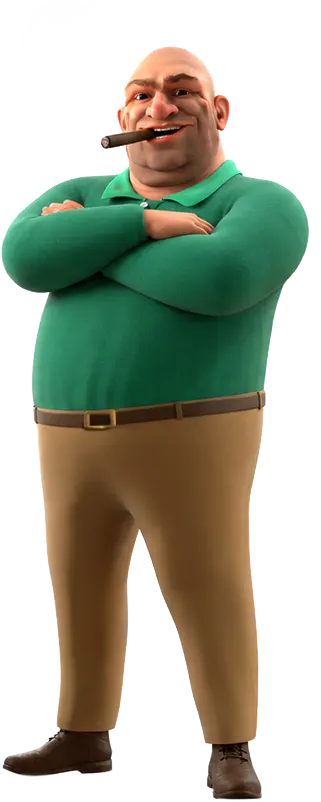
A clear example of the power of details came during the development of Uncle Ledford’s house. Initially, the interior followed a conventional approach: standard lighting, a few paintings, and a familiar layout. It worked — but it lacked personality.
Then came a simple yet powerful idea from James: to cover all the walls with four rows of framed photos — Ledford’s proud collection of Airstream RVs. Some old, some modern. He loves the aluminum.
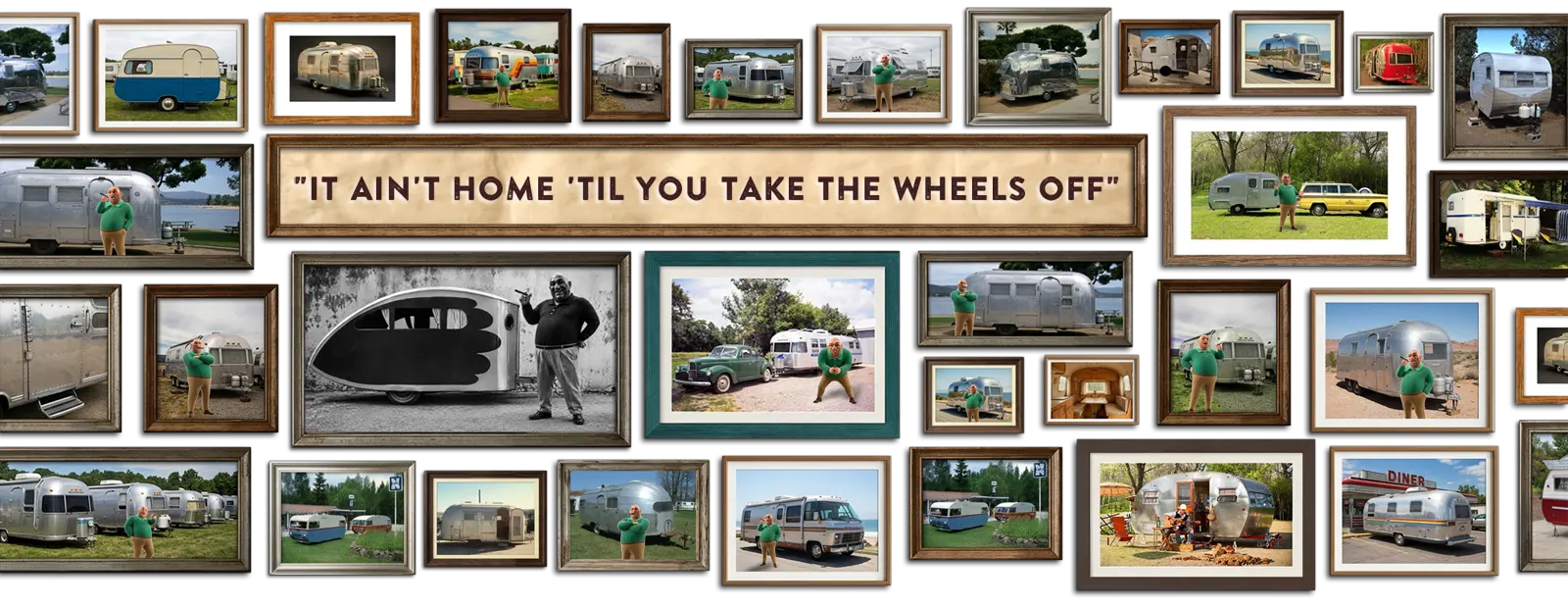
Way Cool World: Ledford’s proud collection of Airstream RVs.
What began as a minor adjustment became a defining feature. The house no longer felt generic — it became a true reflection of the character. In one scene, Ledford proudly says:
“Alumin-ium,” they called it. Comes from ‘alum’ discovered 500 years before Jesus himself came’a callin’.
Flexible, moldable, paintable, corrosion resistant.”
The space now tells a story, adding warmth, humor, and depth without needing extra dialogue. This is the impact of thoughtful detail.
It is also a reflection of collaboration. James brings a sharp, creative instinct and an ability to see beyond what is already there. Even after months of reviewing the same scenes, he continues to find new ways to enhance them. His sense of timing, visual awareness, and humor contribute not just to the project but also to the team’s energy.
In the end, details are not just decorative — they are structural. They shape how a story feels, how characters are understood, and how audiences connect with the world we create. When treated with care, details do more than improve a project — they define it.
As we continue pushing forward with the new 3D animated series, these details keep evolving and refining Way Cool World. Every element is crafted with love and intention — from the way light catches on a dew-covered spiderweb outside a trailer window to the perfect jangle of keys in a character’s pocket.
These aren’t extras. They’re what elevate a fun animated comedy into something special: a series that feels alive, personal, and endlessly rewatchable.
What details have you noticed (or want to see) in your favorite animated worlds? Reach out — we’re always tuning in to what makes this trailer-park universe feel way cool.
Stay tuned for more behind-the-scenes as the new 3D animated series moves forward. The journey from sketch to screen is all in the details.