How Way Cool World Began:
Starting an Animated Series With Music
July 12, 2026
July 12, 2026
Most animated series begin with a script.
Way Cool World began with music.
That difference shaped everything. Instead of building the world first through dialogue and plot points, we started with songs that already carried emotion, personality, and a strong sense of place. The music gave us a tone to follow, and from there the characters, scenes, and story began to emerge piece by piece.
That process made the series feel less like something invented from scratch and more like something we were uncovering together.
For a quick sense of the tone and direction, you can view an early trailer here: Way Cool World — “Jailbird Beauty” (YouTube, Trailer for Episode One).
In traditional animation development, story usually comes first. In our case, the foundation was already there in the music. Each song suggested a mood, a point of view, or even the hint of a character. Instead of forcing a story onto the material, we listened carefully to what was already present.
A lyric becomes a clue.
A rhythm suggests pacing.
A recurring theme hints at identity.
That kind of process changes the creative workflow. It becomes less about invention in the usual sense and more about interpretation, which is a powerful way to build an animated series with a distinct voice.
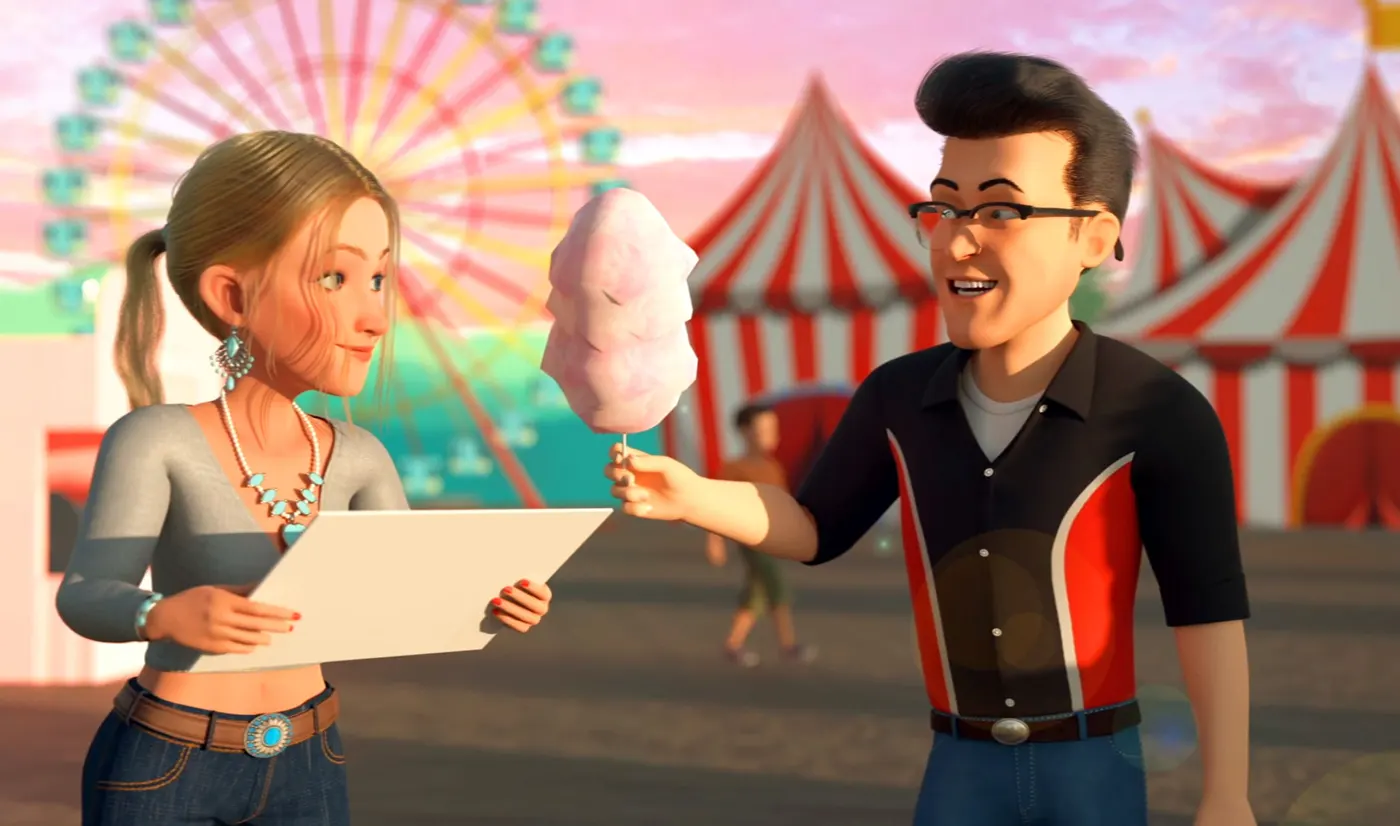
Main characters of Way Cool World animation, Debbie Jo Harris and Antsy McClain at the fair.
When you start an animated series with music, the challenge is translation.
Music gives you emotional direction, but not always a clear narrative. It offers tone, energy, and atmosphere, but the story still has to be shaped visually. That means turning feeling into structure and fragments into continuity.
This is where the creative work becomes especially interesting. The music may suggest a character’s heart, but the visual development helps define how that character moves, reacts, and lives within the series’ world.
That translation from sound to image is one of the most important parts of the Way Cool World process.
Character development in this project started with interpretation.
Rather than beginning with a full backstory, we asked what each character felt like. How do they move? What kind of energy do they carry? How do they exist inside the tone of the music that inspired them?
In our case, that foundation was strengthened by Antsy McClain, the original composer, who also provided early sketches of several key characters. Those drawings brought an immediate sense of personality and spirit, giving the project a visual anchor that complemented the music.
As the series evolved, some of those designs were refined and adapted to better support the emerging story. But the essential character remained the same.
From there, the collaboration expanded. With James Dalessandro contributing at the script level, the world began to take on a more defined shape. The characters, who first appeared in music and early sketches, gradually found their place within a structured narrative.
What began as interpretation became intention.
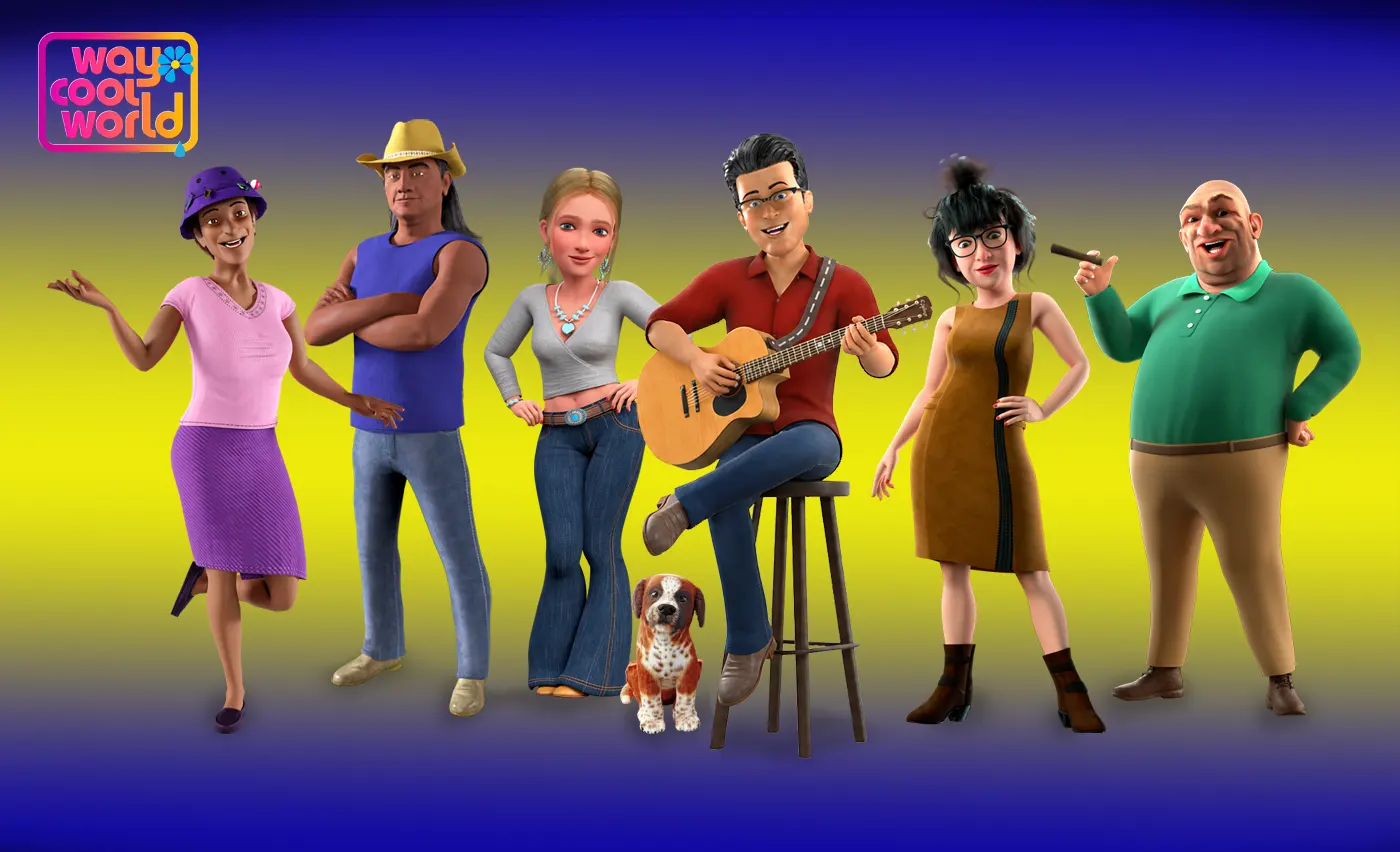
Way Cool World animation — Way cool superstars characters of season one in 3D.
A collection of songs and music-intellectual property by acclaimed musician and artist Antsy McClain.
One of the most important stages in the development of any animated series is storyboarding.
There are many ways to build a story. You can begin with structure, with dialogue, or with tone. But at some point, everything has to become visual.
When a scene exists only as words, it lives in imagination. It can be interpreted many different ways. Storyboarding turns that into something concrete.
A strong storyboard artist does more than translate the script. They interpret it. They bring timing, composition, character behavior, and emotional nuance to the process, often revealing possibilities that were previously invisible.
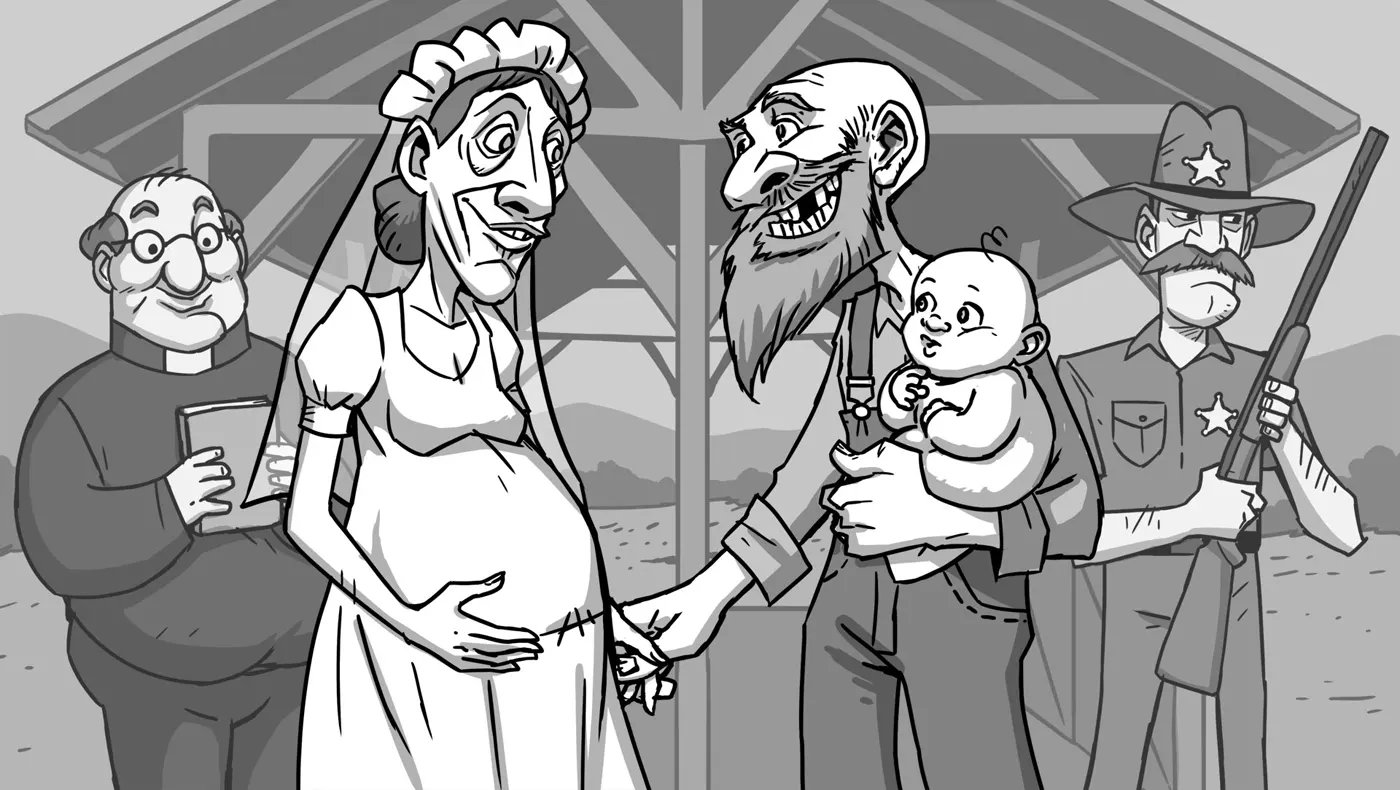
Storyboard drawing from Way Cool World animation, Scene #6, Grandpa’s 4th Shotgun Wedding.
A sequence can change dramatically once it’s drawn. Small gestures appear. Camera movement gains purpose. Characters begin to feel real.
In our experience, many of the most meaningful creative shifts happen at this stage, not because something was rewritten, but because it was seen differently.
A huge help in that process has been StoryBoom.co, storyboarding software that makes it easier for the entire team to collaborate. It has helped keep the workflow clear, fast, and flexible as the project continues to evolve.
At its best, storyboarding becomes more than a technical step. It becomes storytelling in its own right.
Starting an animated series with music also changes the production process.
When concept, design, and story develop simultaneously, constant iteration becomes part of the workflow. Visuals inform the narrative, and the narrative reshapes the visuals in return. At that stage, flexibility matters more than polish.
That kind of process works best with tools and systems that support exploration instead of slowing it down. The goal is to keep ideas moving, make changes quickly, and allow collaboration to happen naturally.
For an independent animation project, that freedom can be especially valuable.
For indie creators, starting with music instead of a script can open up new possibilities. Not every animated series needs to begin with a locked screenplay or a traditional pipeline. Sometimes the raw material already exists in songs, sketches, visual fragments, or moods that have not yet been fully connected.
The challenge is finding a way to shape those pieces into something cohesive while still leaving room for discovery.
That balance between structure and freedom is what gives a project its originality. For Way Cool World, that balance has been central from the beginning.
There are clear advantages to building an animated series from music. The material already carries emotional weight. The world develops with a distinct tone. The characters feel rooted in something larger than plot alone.
At the same time, the process takes patience. Structure may emerge more slowly, and collaboration across creative disciplines becomes essential.
But that tension is also part of what makes the project compelling. The space between freedom and structure is often where the most memorable ideas appear.
Animation is often discussed in terms of pipelines, tools, and production stages. But at its core, it is still about taking something abstract and making it real.
Whether the starting point is a script, a sketch, or a song, the goal is the same: to create something people can connect with.
Way Cool World continues to grow through that process, shaped by music, storyboarding, collaboration, and visual development. And that is part of what makes the project unique.
Originally published on Stage 32: What Happens When You Start an Animated Series with Music Instead of a Script